Saturday, 13 May 2017

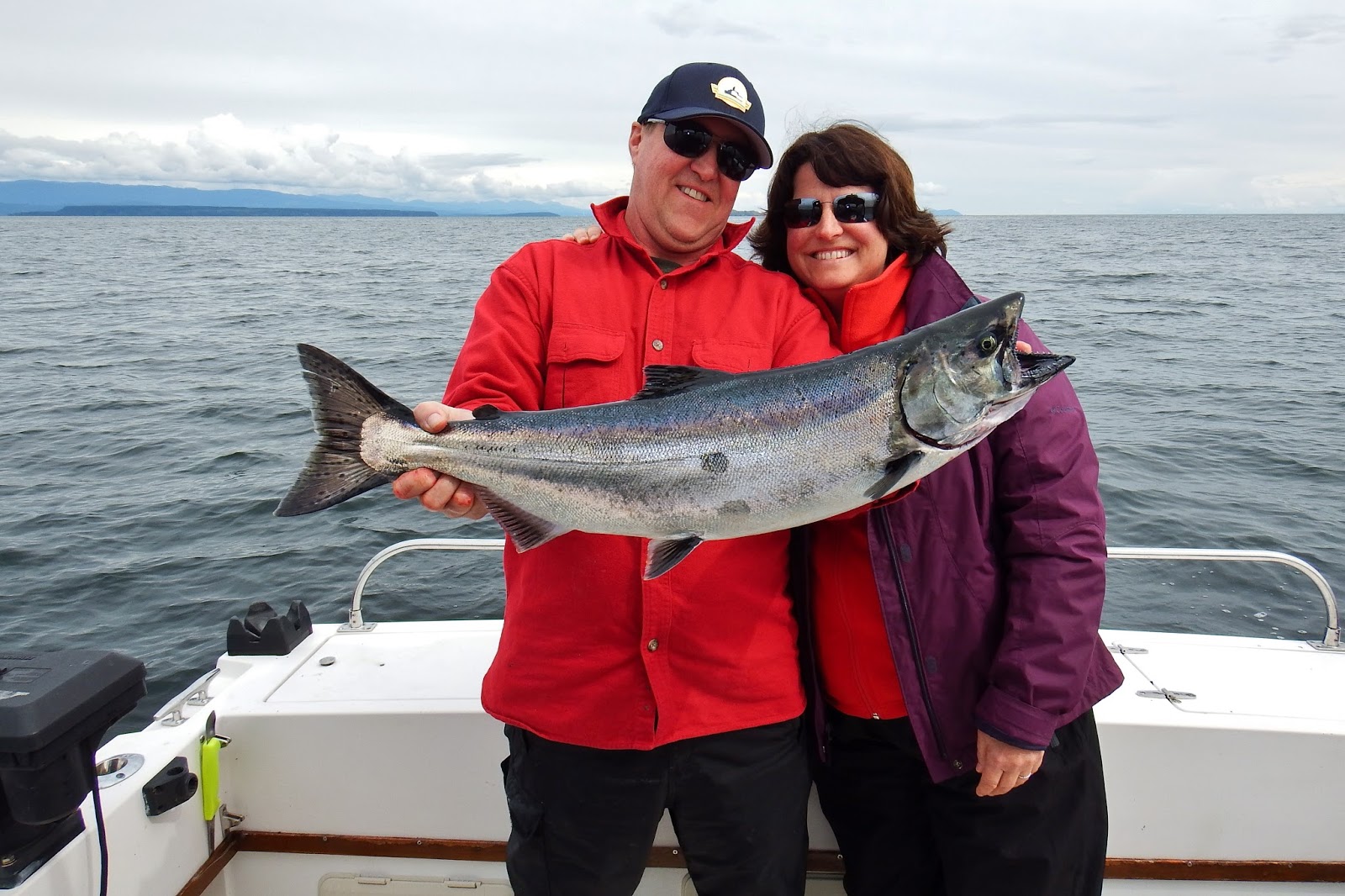
Al and Holli


 Al's birthday is the excuse for a getaway for Al and Holli.  They've come up from the American side of the Strait of Juan de Fuca , not far from Victoria really, to see what;s up with this Campbell River fishing that they have heard about.  Al has been a skipper for big sportfishing boats in Alaska and Hawaii.  (Yikes, no pressure here.)  It was a fine day for all. Those early fish are going to be so tasty. 


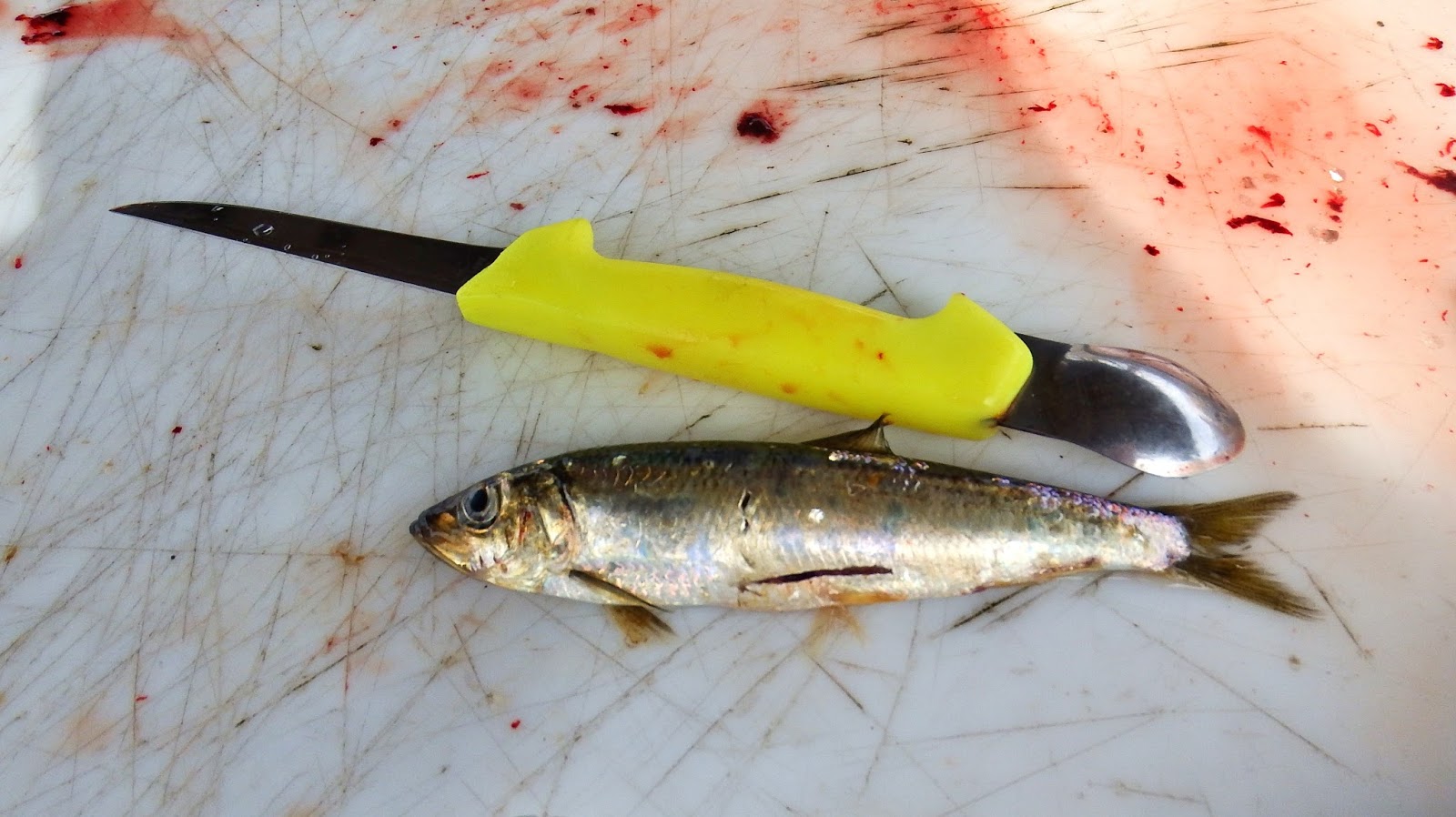
Here's a 7 1/2 inch herring from the stomach of one of the fish. That's good stuff for growing chinooks .  We've see the humpback whales again recently, probably because they are chowing on the same big herring. 


Tuesday, 9 May 2017

Avid Anglers


 I attended the Avid Anglers AGM again this year, and again it was so full of interesting information that I have only enough time to hint at in this post. Avid Anglers is the group of volunteer anglers collecting tissue samples from chinook and coho salmon for DNA analysis to find which river stocks of salmon are about and how they move and live.  This is fulfilling  "citizen science".

Some of the things that have been learned over the years is how the stock composition of fish caught in Georgia Strait varies form north to south within the Strait.  Also we have learned that stocks from the mainland side , which are more remote rivers, have been larger contributors to the catch had previously thought.  And on the Vancouver Island side, showing that those rivers contribute greatly to the recreational catch , resulted in addition funds and production to the Puntledge River hatchery.  

We also learned that there is growing scientific data to support the local observation that seals and also sea lions, are eating a lot of salmon.  The rapid grow of seal in Georia Strait for several decades has now leveled off at about 40,000 seals. Perhaps the Orcas ( Killer Whales ) are having an effect, or they might have reached the limit of their food supply .  They eat salmon when they are in schools of tiny young fish, and when they are adults returning to the rivers.
.  At any rate, it is estimated that seals ,with sea lions , are eating about 5 times as much as they did in the 1970s.  And eating about twice as much as Orcas.  And eating about 6 times the recreational catch.

Wednesday, 12 April 2017

Campbell River Chinook Net Pens

This morning we are putting two deliveries of chinook salmon smolts into a net pen in the Discovery Harbour Marina .  If you like , you could just drop by to see the 3 inch long little guys come pouring out of a pipe from the tank truck , down hoses down the dock, and whoosh into a temporary net pen.

 These are from the Quinsam hatchery, the Campbell River Guides Association supplies this pen, and volunteers to pull the pipes and feed them for a couple of weeks. This is one of 3 such pens , the Tyee Club will host one at the Fisherman’s Harbour, and there is a small one at Hidden Harbour.  they will be held for about two weeks to be fed and conditioned to the salt water, giving them a leg up in survival.

 When they return as adult chinooks in a few years, they will linger right in front of town before heading into the river.  Some will be caught from motorboats, of course, but at the Campbell River Fishing Pier the general public can appreciate a chance at these icons of this city, casting from the pier. 

Of particular interest, these fish are the genetic line of the famed Campbell River Tyees and the Tyee Club of British Columbia. Joining this unique Club rules requires catching a chinook over 30 lbs under Club rules, which include fishing only from a rowboat with specified light tackle. Check out the section on this topic on my website,  . http://gobrightfish.com/tyee-fishing/

Interesting note ;  these little fish face into the current , as they would in a stream, while they are being swept down the pipe.  Then when they fall with the water out of the pipe , they turn in that short distance, or try to, and dive in head first.  That’s why someone holds the end of the pipe up a bit, to give them a softer landing.


Friday, 31 March 2017

Capacity


 My Grady White boat is certified for 4 passengers plus the skipper.  Canada's Ministry of Transport requires all commercially operated small craft to be certified , and the allowed capacity is far more cautious than the manufacturer capacity of 10, as you can see. MoT has a requirement for stability testing, and also adequate seating.  


Monday, 20 March 2017

spring equinox


Sunset to the west behind Victoria peak at spring equinox.


Last light on Mt.Washington. 


Friday, 10 March 2017

mature chinook lures study


Here's something that some of you may be interested in. It's a study to compare the effectiveness of lures for mature chinook salmon. More specifically, it is a study to help Alaska commercial trollers catch mature chinooks that returned to Carrol Inlet , returning as hatchery fish, ( ranched fish ) meant to be caught.
Chinooks from different areas , different genetic lines and run timings, behave differently of course. Still there is much food for thought here.  ( -If you are inclined to think about these sorts of things. Most readers here let the guide do the thinking.  But maybe, hopefully, sharing what's interesting helps share the experience of fishing. )
 We have fishing for very mature chinooks in the waters near the Campbell River when those fish come home in August and September, as in the Tyee Club season . But we also fish for chinooks that are mature migrants coming down the Straits from the north, heading to various river systems over the whole summer, which are often not feeding, or hardly feeding, and tricky to get to bite.
The studies were done in a method whereby by two commercial trollers alternated their style of fishing with one using the proven gear and the other more experimental lures, and then switching styles on alternate days. They logged more than 35,000 lure hours. 739 mature chinooks, over three seasons. It looks like the studies ended in 1992, but weren't posted online until 2016.

See:
http://ssraa.org/wp-content/uploads/2016/02/Terminal-Area-Troll-Chinook-Harvest-Study-Carroll-Inlet-1992.pdf
If the link doesn't work, Google it.

Some , but not all, of the intriguing points I took note note of :

- a very strong preference of spoons over plugs
- the only one plug rated highly was the brass coloured # 950 Tomic plug. ( Coincidentally, that was a brassy gold colour of the 6 inch Tomic that caught David D's 33# Tyee Club rowed fish for us, several years ago. )
- bronze was best colour of the bright spoons
- the preferred lures changed some from year to year
- the spoons mentioned are all of the oldtime standbys: Wonders,  Superiors, Clendon Stewarts, etc. All are what I might call " wobblers ", that is to say, all have a shape that has both a concave and a convex bend, fore and aft, and swim with a pronounced side to side swing,  as opposed to the now popular sportie spoons which are concave "flutter" spoons.
- there was an attempt to fish slower with the big commercial trollers. Those lures are very speed sensitive. I like the Superiors and McMahons because you can bend them to adjust .
- added scents didn't help
- herring and flasher/hootchy rigs also had good results, but were only part of arsenal.
- most of the fish were caught moderately shallow, but often over deep water
- a few fish were fitted with sonic tags which recorded that they regularly swam steeply down to extreme depths, like 90 fathoms ( 720 feet ) . Deep diving is common for chinooks although not commonly known. ( I should write a post about that.)
-  a fish located with the sonic tag was not scared at all by a seal bomb detonated near to it.


Thursday, 9 March 2017

bird signs of spring to come


It is snowing again.  Big wet slush flakes that don't stick around for long. I hope. I don't really need to show another snow photo. 
The Weather Network predicts a cool spring , followed by a good summer, warmer than last year.


In between the lingering snowfalls, birds are giving hope that the seasons are progressing.  I have seen views of seven or ten eagles out in the passage swooping for herring , each of the last two days. They don't often pose close enough for a decent photo.  They are following herring that is dispersing from the spawning areas. On these dates in the last two years , it was a much warmer spring- like weather when the eagle shows happened. It is all probably happening a bit later this year. 


A pair of geese is coming close in to the docks and shore to feed on the new shore grasses, and possibly to scout out a nesting site.  Just as they have done in past years.  Most of their nests will be found by predators, especially raccoons. 
And of course, the bird of spring is the robin, the first I've seen this year. Spring must be coming. 


  PS,  by evening the grass was covered white.